Back to Blog
|1 May 2026
Dad Said No: The Successor's Playbook for Selling Modernization to the Founder
Your $500k digital transformation plan just died at Sunday dinner. Here is the exact psychological and technical playbook to get the founder to say yes to modernization.
i
iReadCustomer Team
Author

Picture this. It’s Sunday evening. The roast chicken is on the table, family chatter fills the air, and you finally decide this is the moment. You take a deep breath and drop a $500,000 deck for **<strong>family business modernization</strong>** right next to the gravy boat. You passionately explain the ROI, the cloud architecture, and the urgent need for real-time analytics.

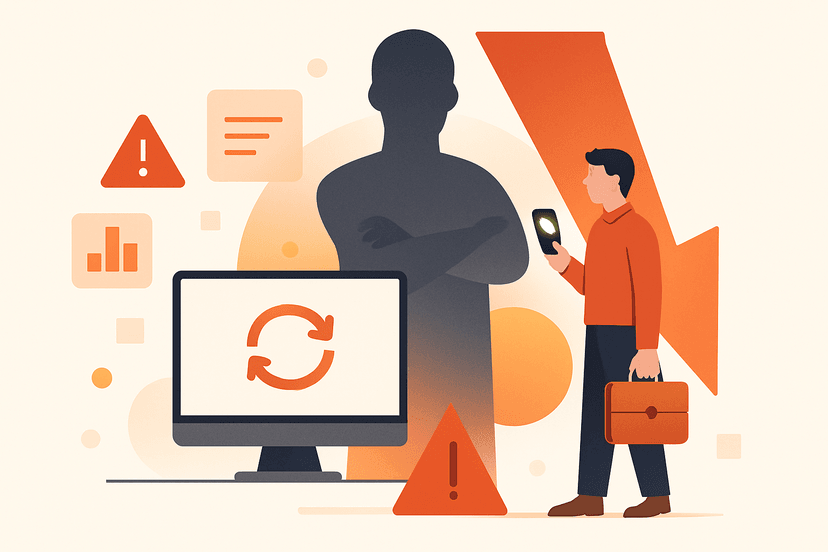
Your 68-year-old father—the founder who built this entire empire from a single, un-airconditioned shophouse in 1987—wipes his mouth with a napkin, looks at you, and delivers the fatal blow:

*"We don’t need any AI. We've done fine for 35 years."*

Just like that, in three sentences, your comprehensive, McKinsey-aligned <em>digital transformation</em> project is dead on arrival.

This is the hidden failure mode of **<em>ERP implementation failure</em>** that nobody documents in elite consulting reports. They love to blame "lack of change management" or "poor end-user adoption." But in the trenches of SME and mid-market family businesses globally, it’s not the warehouse staff that kills the ERP. It’s Dad.

## The Psychology of the Excel Sheet: Why the Founder Fights Back

To overcome this roadblock, you must first understand the true nature of the resistance. For the ambitious second-generation successor, migrating from chaotic paper trails and deeply nested, color-coded Excel sheets to a modern ERP is a purely logical decision. It’s about efficiency.

But for the founder, even if he claims to be "retired" or "stepping back," this isn't about software. **It’s about identity.**

That messy legacy business process is his life's work. The manual workflows, the physical ledgers, and the daily fire-drills are the exact mechanisms he used to build wealth, survive economic crashes, and put you through a top-tier business school.

When you walk into the room and say, "These systems are broken and need to be replaced," his brain doesn't process it as a technological upgrade. He processes it as an erasure of his legacy. His resistance is a protective instinct. Rational arguments about cloud computing and data silos fail completely because the conversation you are having is fundamentally irrational.

## The Dinner-Table Graveyard: 3 Sentences That ALWAYS Fail

Before we look at the winning strategy, let's look at the standard **successor strategy** that is guaranteed to backfire. These statements seem perfectly reasonable in a corporate boardroom, but they are toxic at the family dinner table:

**1. "Dad, the new system will save us a lot of money."**
*What he hears:* "You have been mismanaging the company and bleeding cash for decades."

**2. "Other companies our size are already doing it."**
*What he hears:* "You are old-fashioned, stubborn, and letting our competitors beat us."

**3. "We need to modernize to survive."**
*What he hears:* "Everything you built with your own hands is now worthless and obsolete."

Every single one of these logical statements signals to him that what he built wasn't good enough. The defensive walls go up, the checkbook gets locked away, and your plan is rejected.

## The 1-2-3 Successor’s Playbook: Redesigning the Pitch

If you can't sell the technology, you have to sell the emotional security. Here is the proven 3-step playbook that stops selling software and starts solving the founder's identity threat.

### STEP 1: Position the Project as PROTECTING His Legacy

Strike the words "upgrade," "replace," and "disrupt" from your vocabulary. You are no longer replacing his systems; you are archiving his brilliance.

*"Dad, what you built from that single shop is incredible. But Auntie Linda in purchasing has been with us for 25 years. I want to make sure that the unique way you and she manage our vendors is permanently documented and protected before anyone thinks about retiring. We need to preserve your exact workflow in a digital vault."*

This reframe changes everything. You aren't attacking his legacy; you are building a fortress around it.

### STEP 2: The Stealth Pilot (The "LINE OA" Wedge)

The biggest mistake successors make is attempting a "Big Bang" ERP rollout. It causes massive organizational panic, giving the founder the perfect excuse to say, *"See? I told you the old way was better."*

Instead, use a stealth wedge strategy. Implement a tiny, safe pilot that requires absolutely zero behavior change on the surface. In many parts of Asia, the ultimate wedge is the **LINE OA (Official Account) Bot**.

Rather than forcing your veteran sales team and 60-year-old clients to log into a new, terrifying ERP portal, you let them keep doing what they love: sending messages and photos of order slips in a LINE chat.

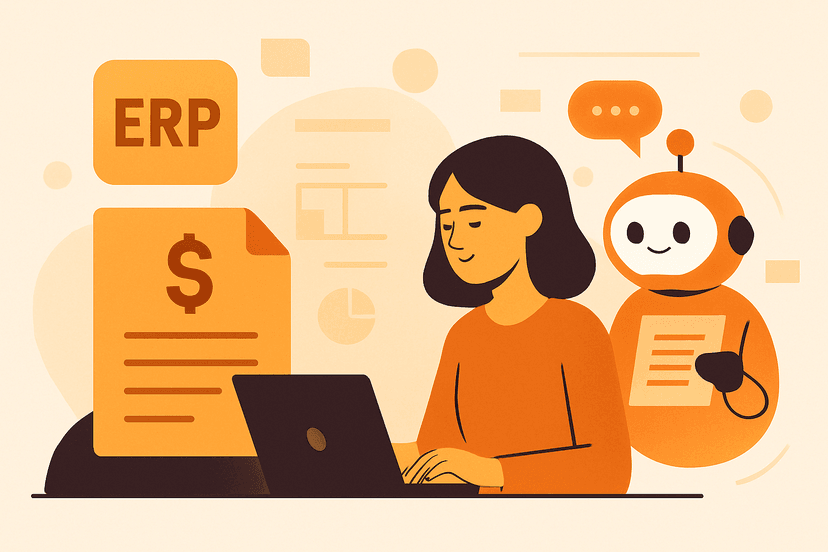
But behind the scenes, you deploy **legacy business AI**—a custom NLP (Natural Language Processing) bot that reads the LINE chat, extracts the order data, and structures it perfectly into the new ERP database.

The magic here is optical illusion. Auntie Linda still uses LINE. The customers still use LINE. The founder walks around the office and sees the exact same comforting behaviors he has seen for 20 years. No one is stressed. No one is complaining. But beneath the surface, you are building a hyper-efficient, real-time data pipeline.

This specific modernization doesn't trigger the founder's protective instincts because, to his eyes, nothing has been disrupted.

### STEP 3: Let HIM Be the One to Announce It

Fast forward through your 90-day pilot. You now have hard data showing that order processing time has dropped by 60% and errors are nearly non-existent.

Do not take this data and grandstand at the next management meeting. Take it privately to his office.

*"Dad, that project we talked about to protect your legacy workflows? Look at the results. You had the vision to let us run this test, and it's working flawlessly. I think the team needs to hear about this success directly from you at tomorrow's Town Hall."*

You hand him the victory. He gets to stand in front of the company as the visionary leader embracing the future. He gets the credit, the respect, and the validation. You get the $500k approved for the full-scale rollout.

## Bonus: Stack the Financial Case (The Tax Incentive Kicker)

Founders are notoriously protective of cash flow. To make the pitch completely bulletproof, combine the psychological safety of the stealth pilot with irresistible financial engineering.

If you are operating in regions with aggressive government tech grants (such as the BOI - Board of Investment tax incentives in Thailand for smart industry upgrades), stack these into the proposal.

When you can demonstrate that a $500k transformation will yield a $250k corporate tax write-off over three years, you trigger the founder's primal instinct as a shrewd dealmaker. You aren't just buying software anymore; you are "getting a 50% discount on world-class tech courtesy of the government." It’s an angle few self-made entrepreneurs can resist.

## Conclusion: The Hardest Pitch of Your Life

**Digital transformation** isn't about code. It’s about the code of conduct between generations. The failure rate of business modernization remains stubbornly high because we try to solve human emotional problems with software architecture.

As a successor, your job isn't to prove that you are smarter or more modern than your parents. Your job is to build a bridge between the legacy that paid for your education and the technology required to survive the next decade.

The hardest sale you will ever make isn't to a venture capitalist, a board of directors, or a cynical enterprise client. It’s to the man who hired your very first babysitter.

Treat his legacy with respect, use stealthy micro-pilots like conversational AI to bypass resistance, and let him hold the trophy at the finish line. That is how you win the game at Sunday dinner.
Picture this. It’s Sunday evening. The roast chicken is on the table, family chatter fills the air, and you finally decide this is the moment. You take a deep breath and drop a $500,000 deck for family business modernization right next to the gravy boat. You passionately explain the ROI, the cloud architecture, and the urgent need for real-time analytics.
Your 68-year-old father—the founder who built this entire empire from a single, un-airconditioned shophouse in 1987—wipes his mouth with a napkin, looks at you, and delivers the fatal blow:
"We don’t need any AI. We've done fine for 35 years."
Just like that, in three sentences, your comprehensive, McKinsey-aligned digital transformation project is dead on arrival.
This is the hidden failure mode of ERP implementation failure that nobody documents in elite consulting reports. They love to blame "lack of change management" or "poor end-user adoption." But in the trenches of SME and mid-market family businesses globally, it’s not the warehouse staff that kills the ERP. It’s Dad.
The Psychology of the Excel Sheet: Why the Founder Fights Back
To overcome this roadblock, you must first understand the true nature of the resistance. For the ambitious second-generation successor, migrating from chaotic paper trails and deeply nested, color-coded Excel sheets to a modern ERP is a purely logical decision. It’s about efficiency.
But for the founder, even if he claims to be "retired" or "stepping back," this isn't about software. It’s about identity.
That messy legacy business process is his life's work. The manual workflows, the physical ledgers, and the daily fire-drills are the exact mechanisms he used to build wealth, survive economic crashes, and put you through a top-tier business school.
When you walk into the room and say, "These systems are broken and need to be replaced," his brain doesn't process it as a technological upgrade. He processes it as an erasure of his legacy. His resistance is a protective instinct. Rational arguments about cloud computing and data silos fail completely because the conversation you are having is fundamentally irrational.
The Dinner-Table Graveyard: 3 Sentences That ALWAYS Fail
Before we look at the winning strategy, let's look at the standard successor strategy that is guaranteed to backfire. These statements seem perfectly reasonable in a corporate boardroom, but they are toxic at the family dinner table:
1. "Dad, the new system will save us a lot of money." What he hears: "You have been mismanaging the company and bleeding cash for decades."
2. "Other companies our size are already doing it." What he hears: "You are old-fashioned, stubborn, and letting our competitors beat us."
3. "We need to modernize to survive." What he hears: "Everything you built with your own hands is now worthless and obsolete."
Every single one of these logical statements signals to him that what he built wasn't good enough. The defensive walls go up, the checkbook gets locked away, and your plan is rejected.
The 1-2-3 Successor’s Playbook: Redesigning the Pitch
If you can't sell the technology, you have to sell the emotional security. Here is the proven 3-step playbook that stops selling software and starts solving the founder's identity threat.
STEP 1: Position the Project as PROTECTING His Legacy
Strike the words "upgrade," "replace," and "disrupt" from your vocabulary. You are no longer replacing his systems; you are archiving his brilliance.
"Dad, what you built from that single shop is incredible. But Auntie Linda in purchasing has been with us for 25 years. I want to make sure that the unique way you and she manage our vendors is permanently documented and protected before anyone thinks about retiring. We need to preserve your exact workflow in a digital vault."
This reframe changes everything. You aren't attacking his legacy; you are building a fortress around it.
STEP 2: The Stealth Pilot (The "LINE OA" Wedge)
The biggest mistake successors make is attempting a "Big Bang" ERP rollout. It causes massive organizational panic, giving the founder the perfect excuse to say, "See? I told you the old way was better."
Instead, use a stealth wedge strategy. Implement a tiny, safe pilot that requires absolutely zero behavior change on the surface. In many parts of Asia, the ultimate wedge is the LINE OA (Official Account) Bot.
Rather than forcing your veteran sales team and 60-year-old clients to log into a new, terrifying ERP portal, you let them keep doing what they love: sending messages and photos of order slips in a LINE chat.
But behind the scenes, you deploy legacy business AI—a custom NLP (Natural Language Processing) bot that reads the LINE chat, extracts the order data, and structures it perfectly into the new ERP database.
The magic here is optical illusion. Auntie Linda still uses LINE. The customers still use LINE. The founder walks around the office and sees the exact same comforting behaviors he has seen for 20 years. No one is stressed. No one is complaining. But beneath the surface, you are building a hyper-efficient, real-time data pipeline.
This specific modernization doesn't trigger the founder's protective instincts because, to his eyes, nothing has been disrupted.
STEP 3: Let HIM Be the One to Announce It
Fast forward through your 90-day pilot. You now have hard data showing that order processing time has dropped by 60% and errors are nearly non-existent.
Do not take this data and grandstand at the next management meeting. Take it privately to his office.
"Dad, that project we talked about to protect your legacy workflows? Look at the results. You had the vision to let us run this test, and it's working flawlessly. I think the team needs to hear about this success directly from you at tomorrow's Town Hall."
You hand him the victory. He gets to stand in front of the company as the visionary leader embracing the future. He gets the credit, the respect, and the validation. You get the $500k approved for the full-scale rollout.
Bonus: Stack the Financial Case (The Tax Incentive Kicker)
Founders are notoriously protective of cash flow. To make the pitch completely bulletproof, combine the psychological safety of the stealth pilot with irresistible financial engineering.
If you are operating in regions with aggressive government tech grants (such as the BOI - Board of Investment tax incentives in Thailand for smart industry upgrades), stack these into the proposal.
When you can demonstrate that a $500k transformation will yield a $250k corporate tax write-off over three years, you trigger the founder's primal instinct as a shrewd dealmaker. You aren't just buying software anymore; you are "getting a 50% discount on world-class tech courtesy of the government." It’s an angle few self-made entrepreneurs can resist.
Conclusion: The Hardest Pitch of Your Life
Digital transformation isn't about code. It’s about the code of conduct between generations. The failure rate of business modernization remains stubbornly high because we try to solve human emotional problems with software architecture.
As a successor, your job isn't to prove that you are smarter or more modern than your parents. Your job is to build a bridge between the legacy that paid for your education and the technology required to survive the next decade.
The hardest sale you will ever make isn't to a venture capitalist, a board of directors, or a cynical enterprise client. It’s to the man who hired your very first babysitter.
Treat his legacy with respect, use stealthy micro-pilots like conversational AI to bypass resistance, and let him hold the trophy at the finish line. That is how you win the game at Sunday dinner.