
AI implementationthat works past the demo
We pick one job your team repeats every day, build an AI assistant connected to your own data and systems, test it on real examples before it goes live, and hand it over so your team can run it.
Describe the job out loud and the AI writes up the scope. Free during the trial.
Wondering how we charge? See how pricing works
Why most AI demos never reach daily work
AI implementation means connecting AI to the real work of your business: your data, the systems you already use and the people who check the work. It is more than a chatbot to play with. Demos look great in a meeting, then they meet your real data, a customer who goes off-script, or the day the AI gets it wrong, and nobody knows what happens next.
So we start with one job you can measure, test it on your own examples before launch, and decide from day one that when the AI is unsure, the work goes to a person on your team.
What a working system needs
- Connected to the data and systems you actually use, not sample data
- Tested on real examples your team picks, before launch
- Risky actions wait for a person to approve them
- The AI can be switched off so the team goes back to the manual way
- A manual, so your own team can run it
AI assistants that do real work
Chosen from the jobs your team repeats every day. We have built and shipped every one of these.
AI agents that work step by step
Looks things up, checks stock, calculates and drafts work for your team to review. For anything important, it waits for a person to confirm.
Chat assistants for LINE and Facebook
Answers customers first from your products and promotions, and hands anything it can’t answer to your team straight away.
AI that reads and checks documents
Reads receipts, tax invoices and incoming documents, pulls out what matters and tells you what is still missing. Nothing changes until a person approves.
Search your company knowledge
Ask in plain language and get answers from your own files, manuals and internal data, instead of opening folder after folder.
From idea to a system your team uses every day
Six steps. You see results at each one before deciding to continue.
- 1
Talk and pick one job
We look for work that repeats often, takes real time and can be measured, and start there.
- 2
Check the data and safety
Where the data lives, who can see it, whether it includes personal data, and which actions need a person’s approval.
- 3
Build a small trial
Only what is needed to prove it works, using trial data or read-only access first.
- 4
Test it on your real work
Using examples your team chooses: is it right, is it fast enough, what does each task cost in AI usage, and what happens when it is wrong.
- 5
Go live and keep watch
Add logins, permissions and alerts for problems, then keep an eye on quality after launch.
- 6
Hand it to your team
We hand over the code, settings, test results and manual, and train the people who will look after it.
What to bring to the first call
No technical documents needed. A rough description is enough.
- How the job is done today, step by step
- How many times a month it happens
- Which systems it touches, e.g. LINE, your ERP, Google Sheets
- How bad it is if the AI gets it wrong
AI systems our team has built
See what problem each one solved and how we built it.
See all workKonkui AI
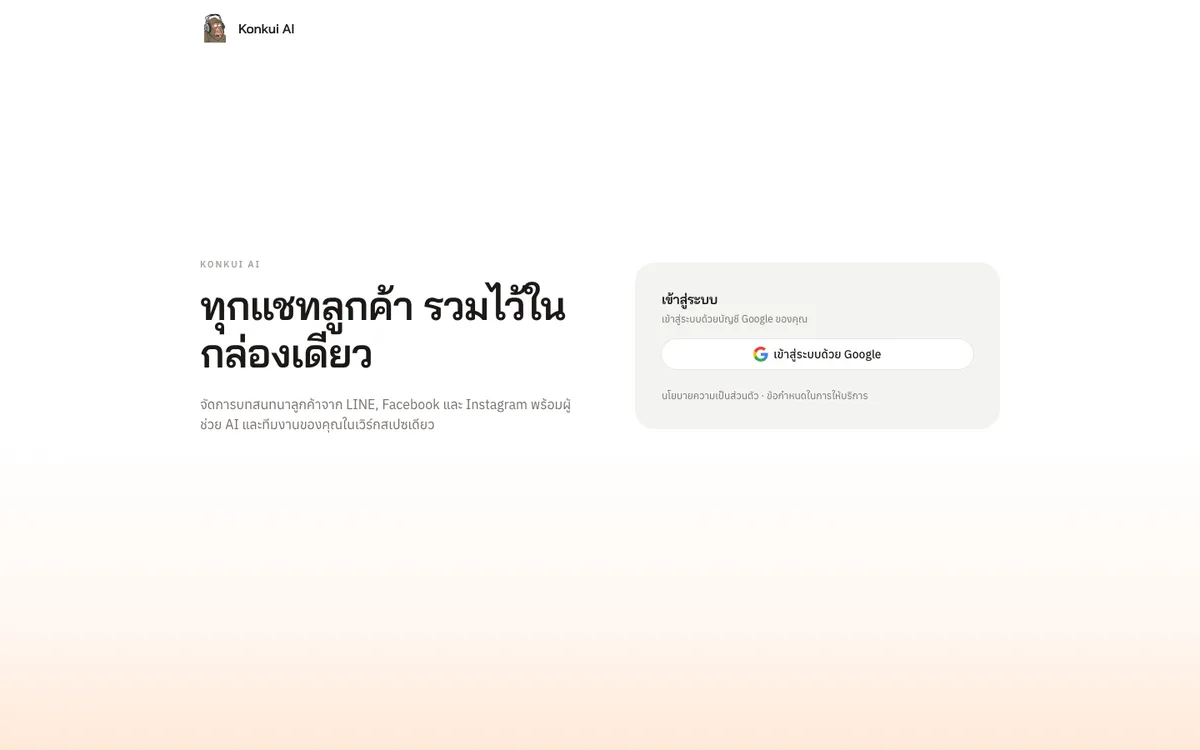
One inbox for LINE, Facebook and Instagram customer chats, with an AI Assistant that answers first and hands off to the team.
4 data setsCore shop data
Read the caseAccounting & Tax / FinTechAkon AI
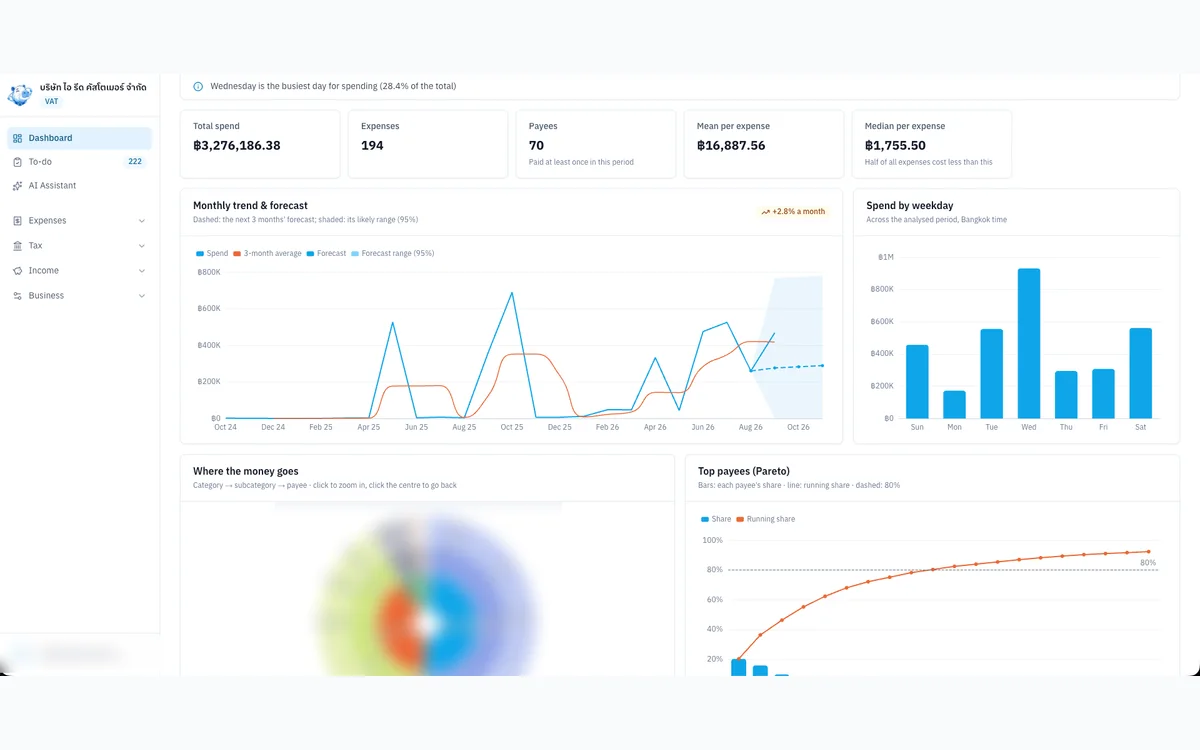
Internal tool that organises expense evidence, input VAT and P.P.36 for a VAT-registered Thai company.
2 verdictsPer document
Read the caseCosmetics R&DOrganics R&D AI
AI workspace for a cosmetics R&D team to find ingredients, check stock, and draft, cost and revise formulas.
5 skillsIn one agent
Read the caseWhat you get, and what stays yours
Agreed in writing in the contract before work starts.
At handover you get
- A working system that passed the tests we agreed on
- The code and AI settings made for your project
- Test results, including the limits we found
- A troubleshooting manual and how to switch the AI off and go manual
- Training for the team who will look after it
Always yours
- Your data stays yours. It is not used to train AI unless you allow it in writing
- AI and cloud accounts are opened in your name; you pay the providers directly
- Code made for your project is handed over after acceptance and payment as agreed
- No lock-in: your team can run it from the manual, or ask us to look after it
Questions before hiring an AI implementation company
Short answers in plain words
How is AI implementation different from an AI demo?
A demo shows an idea can work. A system you use every day also has to connect to your data and existing systems, be tested on your real work, have a person approve risky actions, be watched after launch, and be easy to switch off so the team can go back to the manual way.
How much does AI implementation cost?
It depends on the size of the job, how many systems it connects to and how risky a mistake would be. We price by the working days the agreed scope needs. Our pricing page shows how we count them, with examples, or you can describe the job to our AI estimator first. Monthly AI and cloud usage is paid separately, straight to the providers.
Should we start with a small trial or build the whole system?
Start with a trial if you are unsure about your data, the job has many exceptions, or you don’t yet know if it pays off. If the job is clear, the data is ready and we can agree how to test it, the trial can grow into the live system, but it always passes testing before it goes live.
Will our company data be used to train AI?
Not unless you allow it. Your data stays yours. The contract records where the data goes, how long it is kept and what it is used for. Training or fine-tuning a model on it needs your written permission first.
Who owns the code and the accounts?
The live AI and cloud accounts are opened in your name. The code, AI settings, test results and documents made for your project are handed over after acceptance and payment as agreed. Tools we built before, open-source software and the AI providers’ own technology keep their existing licences.
How do we know the system is ready to go live?
Before building, we agree on a set of real examples and what counts as a pass: how often it is right, whether the job gets done, whether it is fast enough, what each task costs in AI usage and whether mistakes reach a person. It goes live only after passing, never on the strength of a demo with hand-picked examples.
What happens if the AI gets it wrong or something breaks?
We plan for it from the start. When the AI is unsure or a connected system fails, it does not guess or repeat the action; it passes the work to a person on your team. Risky actions need approval first, and if there is a problem, your team can switch the AI off and go back to the manual way using the manual.
Contact Us
Free consultation — estimate timeline, budget, and scope. Online or onsite.
Or reach us directly